The Evolution of Episodic Browser Challenges: Integrating Adventure Narratives with Strategic Multiplayer Dynamics
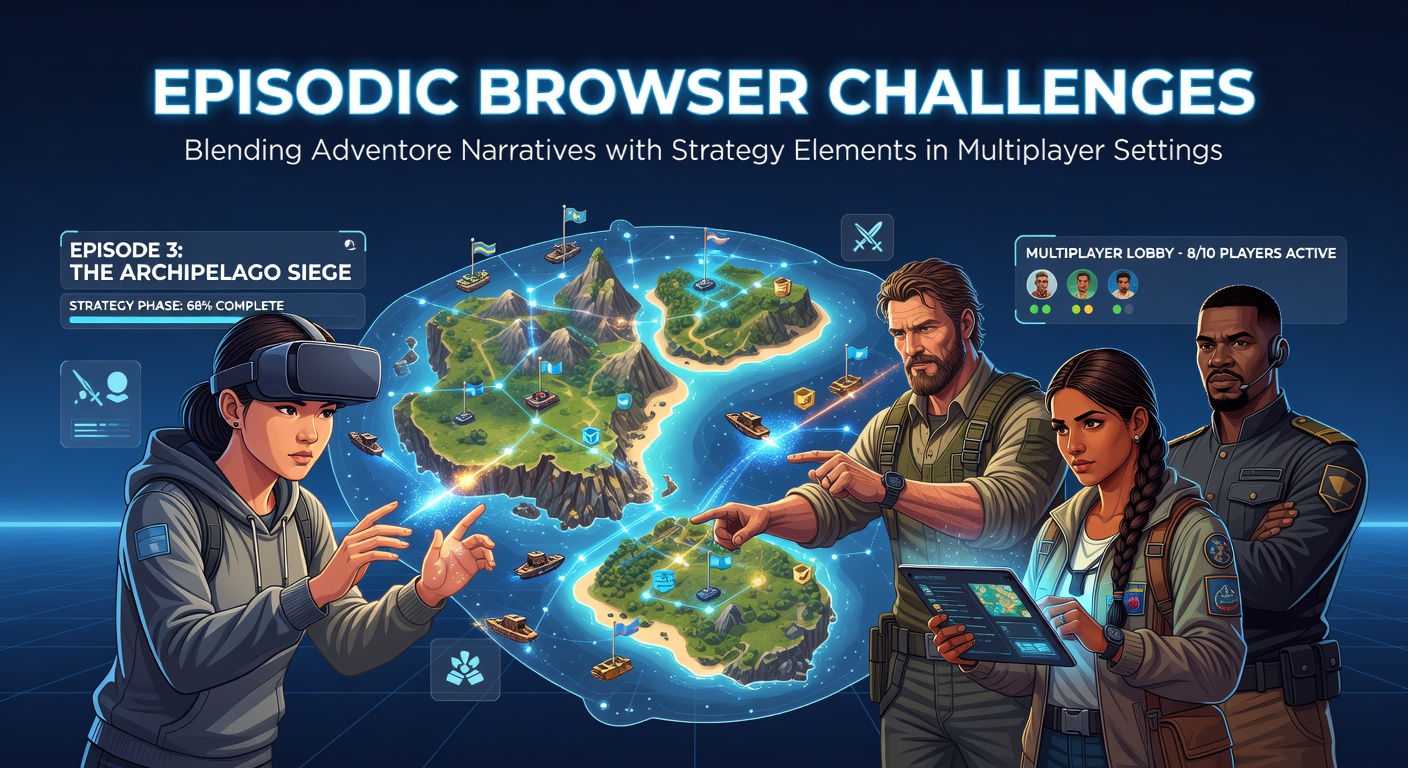
Episodic browser challenges have gained traction as platforms combine serialized adventure narratives with real-time strategy elements that support multiple participants, and developers release weekly or monthly installments that advance overarching plots while requiring coordinated decision-making among users across different time zones. These formats emerged from earlier text-based multiplayer experiments in the 2010s, yet they now incorporate visual storytelling layers alongside resource management tools that players access directly through standard web browsers without additional downloads.
Core Mechanics Driving Participation
Participants select character roles at the start of each episode, then navigate branching story paths that affect shared game states while deploying units or negotiating alliances in strategy phases that last between fifteen and forty-five minutes per session. Data from industry reports indicate that retention rates climb when narrative outcomes directly influence subsequent tactical scenarios, such as altered terrain maps or new resource pools unlocked by collective choices made in prior episodes. Browser technologies enable seamless synchronization through WebSocket protocols, allowing dozens of concurrent users to influence the same persistent world without dedicated servers in many implementations.
Examples from Recent Deployments
One documented case involves a title released in early 2025 that follows an expedition across procedurally generated continents, where explorers uncover artifacts during story segments and then allocate limited supplies during strategy rounds to defend settlements against simulated threats. Players coordinate via in-browser chat and shared dashboards, and updates in May 2026 introduced refined diplomacy systems that let factions propose treaties affecting resource distribution across all active groups. Another project, developed by a European studio, layers detective investigation threads onto city-building mechanics, with clues gathered in narrative chapters shaping defensive layouts that competing teams must breach or reinforce during live events.

These instances demonstrate how episodic structures sustain long-term engagement because each installment concludes with cliffhangers that resolve only after strategic resolutions are implemented by the community, and analytics platforms track participation spikes correlating with major plot twists revealed at scheduled intervals.
Technical and Design Considerations
Developers rely on HTML5 canvas elements and JavaScript frameworks to render both narrative text with interactive illustrations and grid-based or hex-map strategy interfaces that update dynamically as users submit commands. Research conducted at several North American universities highlights that latency below 150 milliseconds maintains immersion when narrative decisions trigger immediate visual changes visible to all participants simultaneously. Security protocols incorporate token-based authentication to prevent unauthorized alterations to shared progress, while content delivery networks distribute episodic assets efficiently across regions including Australia and Canada where browser adoption for gaming remains high according to regional digital entertainment surveys.
Community and Progression Systems
Progression often ties individual contributions to group achievements, such as unlocking exclusive story branches when a critical mass of players completes optional strategy objectives within time limits. Observers note that leaderboards display both narrative impact scores and tactical efficiency metrics, encouraging repeated participation across episodes. External platforms occasionally integrate these challenges through embedded widgets, expanding reach without requiring users to leave their primary browsing environments.
Future Outlook and Industry Context
Projections shared by the Entertainment Software Association suggest continued investment in browser-native multiplayer tools through 2027, driven by accessibility advantages that lower barriers for casual participants who prefer not to install large clients. A separate analysis from Australian interactive media researchers points to increasing use of cloud-based simulation engines that handle complex strategy calculations while preserving lightweight front-end experiences suitable for episodic delivery. These developments align with broader patterns where narrative depth and strategic complexity coexist within the same session rather than remaining segregated across distinct game genres.
Conclusion
Episodic browser challenges continue to refine the integration of adventure storytelling and multiplayer strategy through iterative design updates and cross-regional data insights, and current implementations demonstrate measurable effects on session length and repeat engagement as documented in available industry metrics. Ongoing refinements in synchronization technology and content pacing are expected to sustain this format as an accessible entry point for broader audiences exploring combined narrative and tactical gameplay.