Sequential Problem-Solving in Hybrid Puzzle-Action Browser Games with Daily Multiplayer Integration
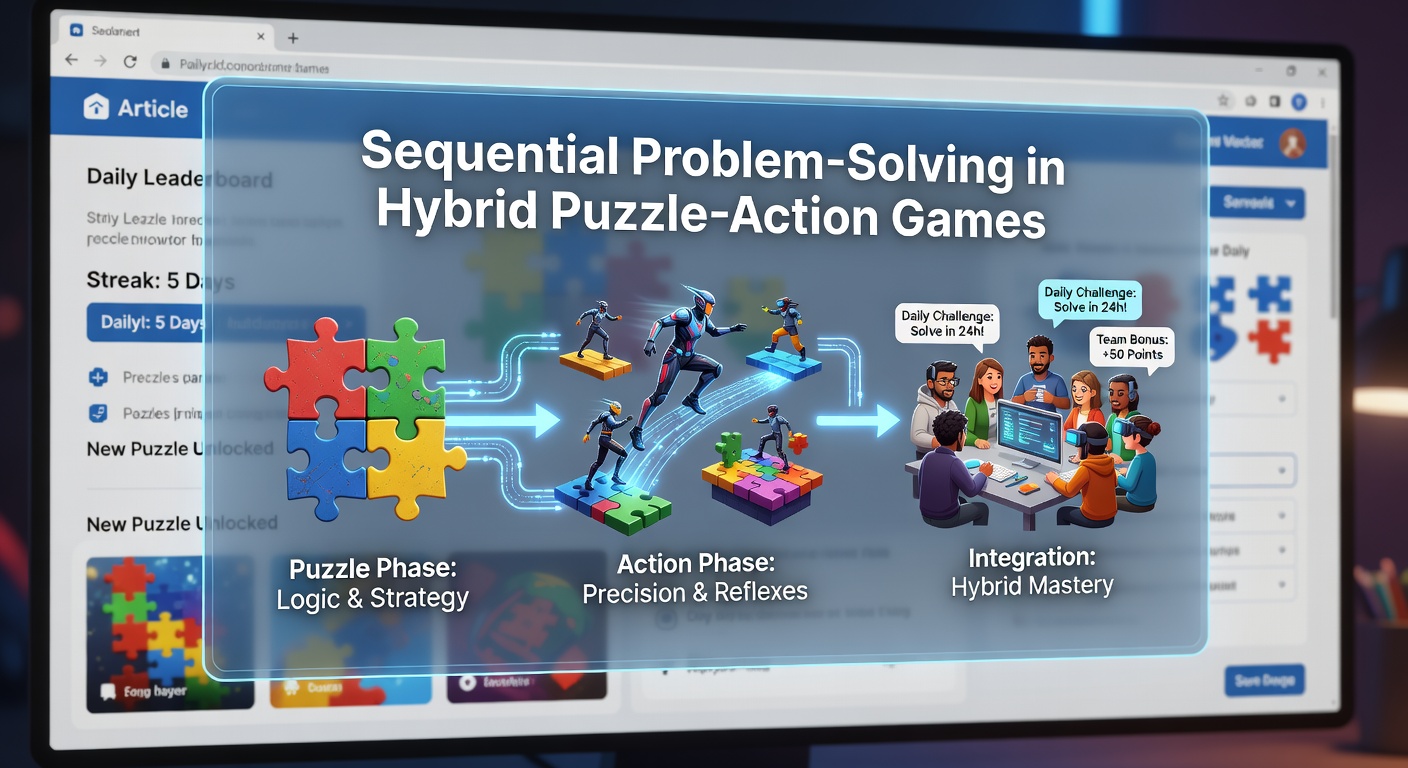
Hybrid puzzle-action browser games combine step-by-step logic sequences with real-time movement and timing requirements, and teh addition of daily multiplayer components creates repeated opportunities for players to refine those sequences across sessions. Developers structure core loops so that each puzzle segment breaks into ordered stages where one solution unlocks the next action phase, and multiplayer daily resets force participants to adapt previous sequences to new variables introduced by other users.
Core Mechanics of Sequential Breakdowns
Game designers divide challenges into chained sub-problems that require identification of dependencies before execution, such as matching patterns to open pathways followed by precise platforming across those pathways. Data from industry reports shows that successful completion rates rise when players practice isolated segments before combining them, and daily multiplayer events add fresh constraints like shared timers or competing team objectives that alter the order of steps without changing the underlying logic. Observers note that players who log in consistently during these windows demonstrate faster adaptation because each reset presents familiar elements rearranged into new sequences.
Role of Daily Multiplayer Layers
Multiplayer daily components operate through synchronized global or regional challenges that refresh every twenty-four hours, requiring participants to solve puzzle sequences while accounting for live actions from teammates or opponents. Research indicates these elements encourage incremental refinement because a failed sequence in one session carries forward as experience that informs adjustments the next day. In May 2026 several platforms introduced cross-region daily events that layered additional environmental variables onto existing puzzle structures, resulting in measurable increases in session length according to figures released by the Interactive Software Federation of Europe at ISFE reports.
Players encounter situations where one person's solved segment affects another's available options, creating dynamic reordering of steps within the same overarching problem. This setup trains recognition of conditional branches, and repeated exposure through daily cycles strengthens the ability to reorder sequences on the fly when external inputs change.
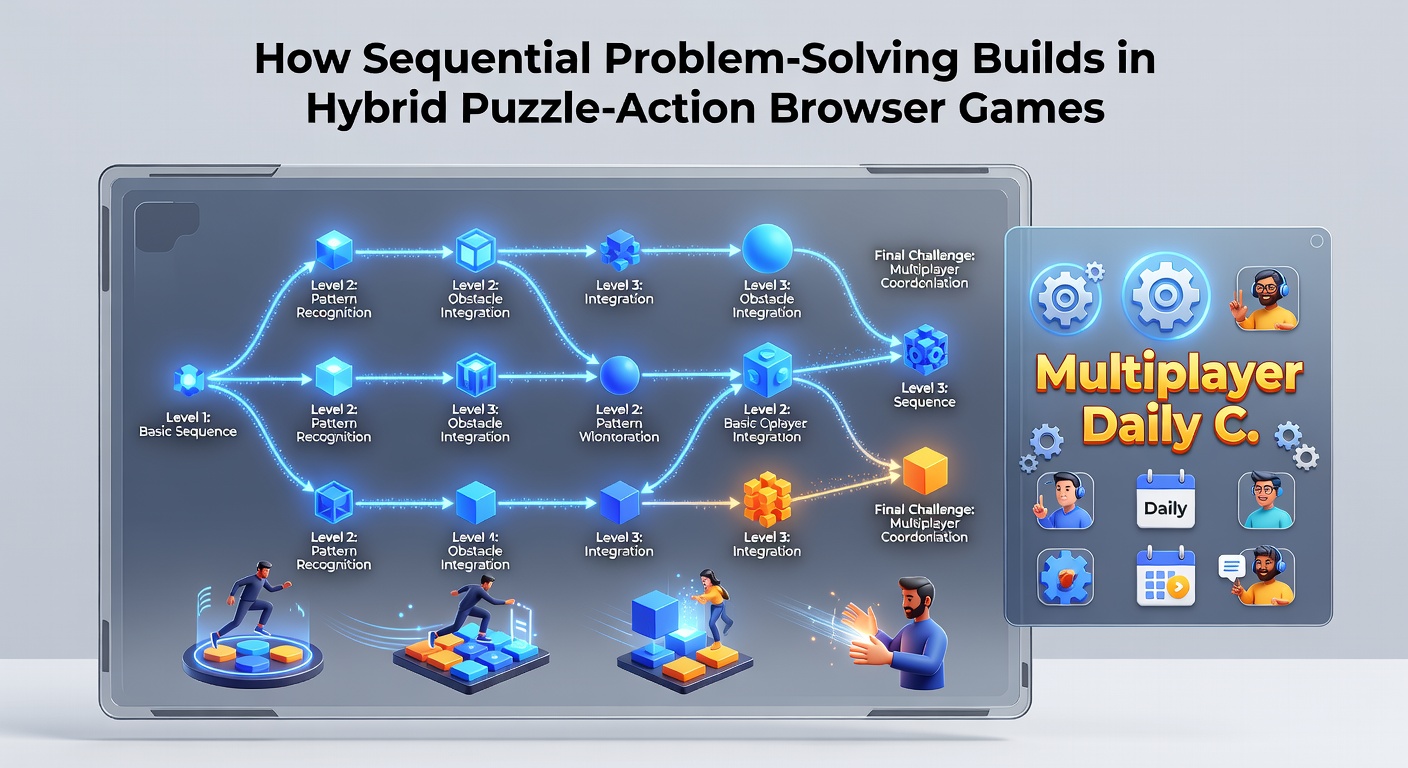
Progression Through Repeated Cycles
Advancement systems in these titles track mastery of individual sequence types rather than single completions, awarding incremental upgrades that reduce the cognitive load for later stages. Studies from academic sources such as those published through university gaming labs reveal that retention improves when daily multiplayer tasks reuse core puzzle patterns with increasing complexity, allowing players to transfer learned sequences to novel contexts. The structure rewards identification of reusable sub-routines, and competitive leaderboards add motivation to optimize the order and speed of those sub-routines.
Take one documented case where a development team tracked user behavior over six months and found that participants who engaged with daily events at least four times per week completed later hybrid levels thirty percent faster than infrequent players. This pattern emerges because each daily cycle functions as deliberate practice on sequence variation.
Technical Implementation of Layered Challenges
Browser-based engines handle these systems through modular code that separates puzzle logic from action physics, permitting quick swaps of daily parameters without full game reloads. Synchronization occurs via lightweight server calls that update shared state for all active users, ensuring that sequence changes propagate instantly across the multiplayer instance. Observers have documented how this technical separation supports the educational aspect of problem-solving by keeping the core sequence rules consistent while varying only the combination order and external pressures.
Observed Patterns in Player Behavior
Analytics collected across multiple titles show clusters of players who specialize in particular sequence lengths, returning daily to test optimizations against new multiplayer variables. Those who've studied engagement metrics note that tutorial systems often present isolated sequences first, then gradually introduce daily multiplayer overlays that force recombination. The approach produces measurable skill transfer when users apply the same decomposition techniques to entirely new hybrid levels introduced in seasonal updates.
Conclusion
Sequential problem-solving develops through the deliberate layering of puzzle stages, action execution, and recurring daily multiplayer constraints that require ongoing adaptation of learned sequences. The format provides repeated, low-friction practice opportunities within browser environments, and data from 2026 events confirms continued growth in these mechanics across platforms. Players build competence by mastering ordered sub-problems before integrating them under live competitive or cooperative pressure, resulting in transferable skills visible in faster completion times and higher adaptability to changing conditions.