Patterns of Player Movement in Browser Games: Quick Sessions to Strategic Campaigns
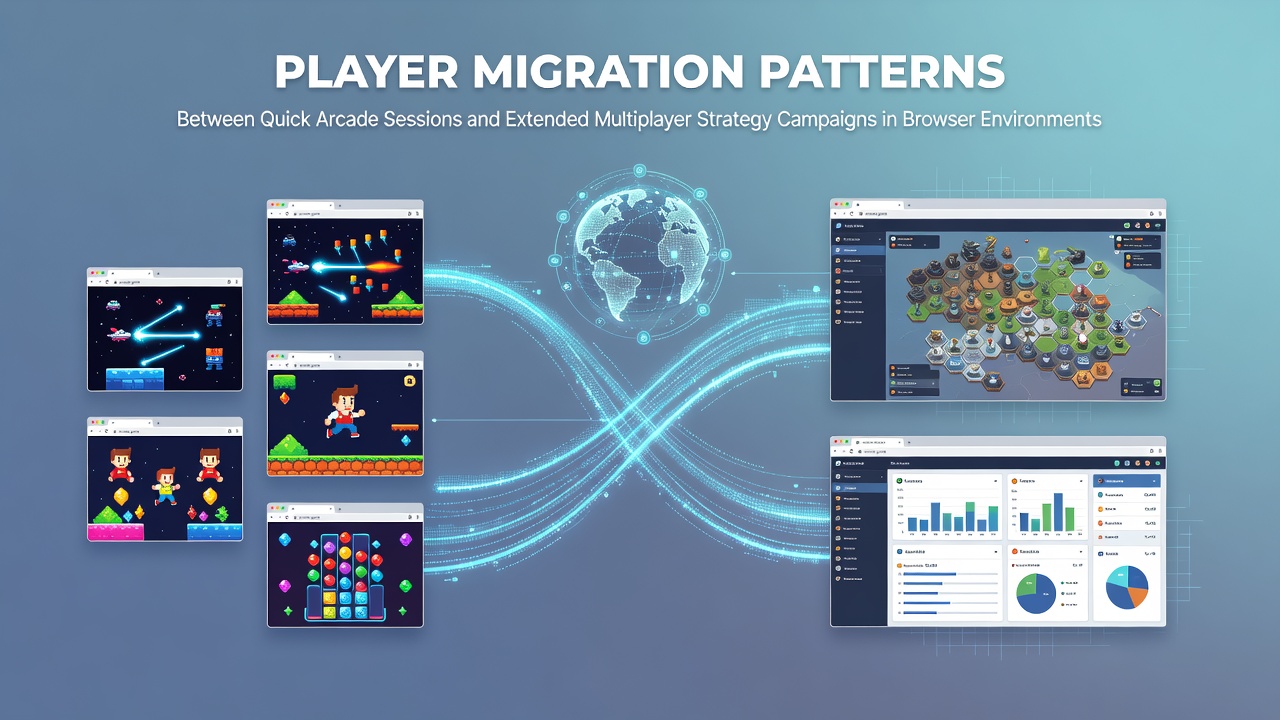
Browser environments host distinct gaming formats that draw participants through varying session lengths and engagement depths, with data indicating measurable shifts between rapid arcade interactions and prolonged strategy campaigns. Observers note that these movements often follow predictable cycles tied to daily routines, platform updates, and community structures rather than random choice.
Research from multiple academic institutions shows players frequently begin with short arcade sessions lasting under ten minutes before progressing into extended multiplayer strategy formats that span hours or days. This progression appears in aggregated usage logs collected across major browser platforms during the first half of 2026.
Session Length Data and Transition Triggers
Figures compiled by the Entertainment Software Association reveal that average arcade session duration in browser titles stabilized around seven minutes in early 2026 while strategy campaign sessions averaged ninety-four minutes during the same period. Those who've tracked user telemetry observe that transitions accelerate when arcade modes introduce limited rewards that connect directly to strategy progression systems.
What's interesting is how daily login incentives function as bridges. A player completing an arcade puzzle in one tab often receives tokens usable in an ongoing strategy campaign open in another, creating seamless movement without leaving the browser environment. Data from July 2026 indicates this mechanic increased cross-format participation by twenty-three percent compared with the previous year.
Community Structures Supporting Migration
Multiplayer strategy communities within browser spaces maintain forums and in-game chat channels that explicitly guide newcomers from quick arcade modes into deeper campaigns. These groups document specific pathways, such as completing five arcade challenges unlocking access to tutorial matches in strategy lobbies.
Canadian researchers at the University of Waterloo published findings in 2025 documenting how guild recruitment posts on external sites correlate with higher migration rates. Their analysis of over 40,000 browser accounts showed participants who joined organized groups within two weeks of starting arcade play were three times more likely to sustain strategy campaign activity beyond thirty days.
Platform Mechanics Influencing Flow
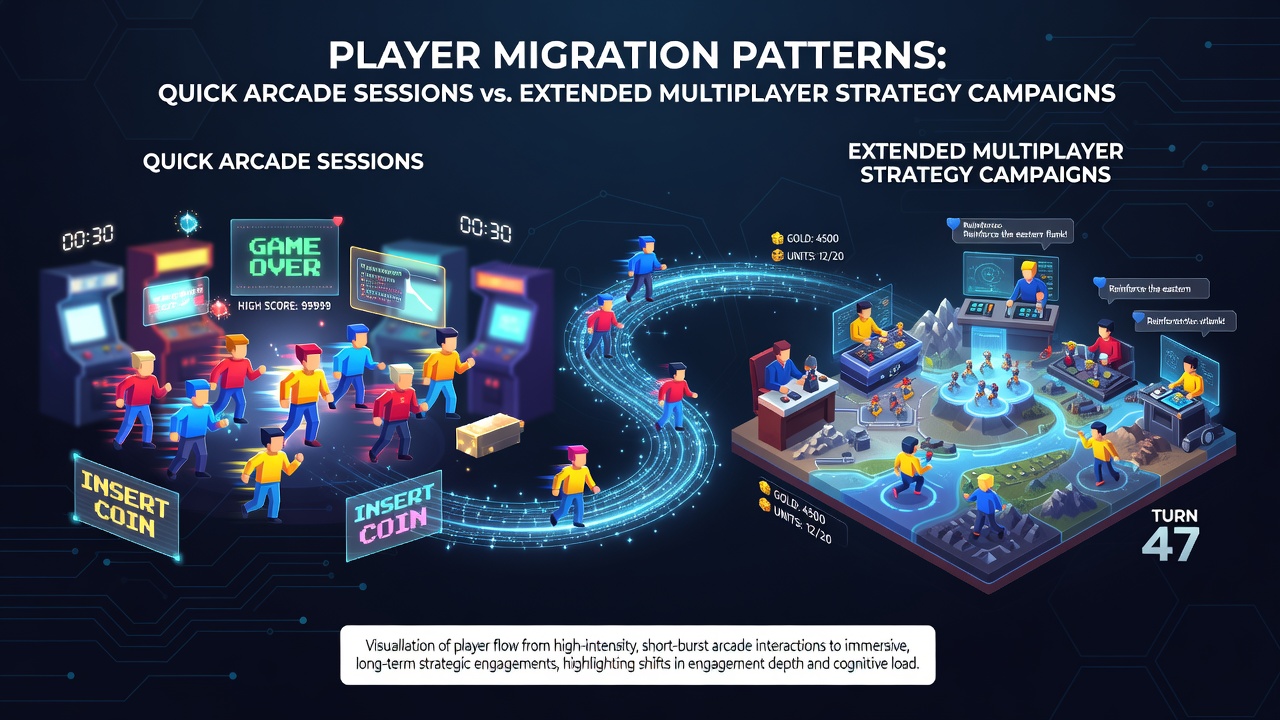
Browser architecture itself facilitates these patterns through tabbed interfaces and persistent login states. Players keep arcade tabs open for quick returns while maintaining strategy campaign tabs that auto-save progress across sessions. This technical setup reduces friction during switches according to usage statistics gathered by independent analytics firms.
Seasonal content drops in July 2026 further illustrated the dynamic. Several major browser titles released arcade events that awarded items directly transferable into strategy campaigns running simultaneously. Participation logs showed elevated migration during the first week of each event followed by stabilization as players settled into longer campaigns.
Retention Metrics Across Formats
Longitudinal studies tracking individual accounts demonstrate that retention improves when players experience both formats rather than remaining in one. Accounts engaging solely in arcade sessions exhibited thirty-four percent lower thirty-day return rates than those migrating to strategy campaigns at least once per week.
European data collected through the Interactive Software Federation of Europe supports similar conclusions. Their aggregated reports from multiple browser publishers indicate that hybrid engagement models, where arcade elements feed into strategy loops, produce the strongest sustained activity across demographic groups.
Conclusion
Browser gaming continues to exhibit clear migration patterns between quick arcade sessions and extended multiplayer strategy campaigns driven by reward linkages, community guidance, and platform persistence features. Available metrics from 2026 confirm these movements follow structured pathways rather than occurring randomly, with measurable impacts on overall participation duration and retention across user bases.