Instant Entry Tools on Digital Platforms Catalyze Shifts Toward Intricate Multiplayer Strategy Networks
Drew Schmitt · Aug 11, 2026
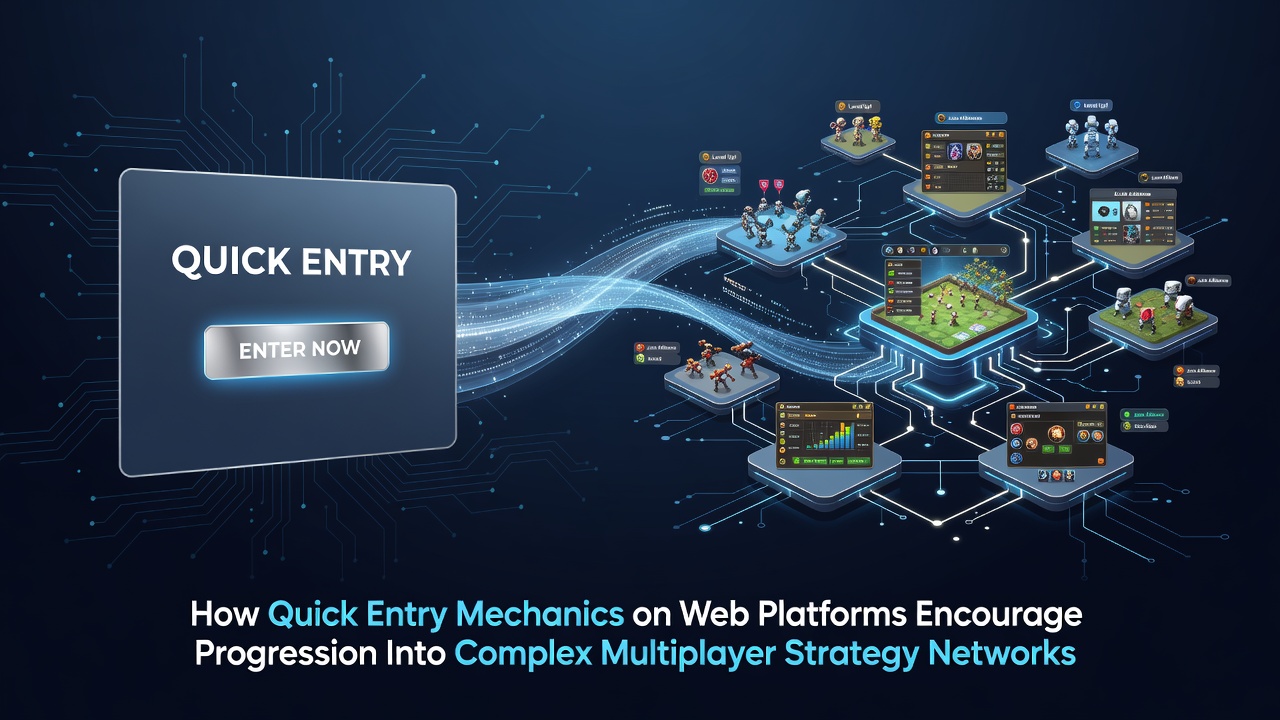
Instant Entry Tools on Digital Platforms Catalyze Shifts Toward Intricate Multiplayer Strategy Networks
Quick entry mechanics on web platforms consist of simplified login processes, one-click tutorials, and modular gameplay segments that allow users to begin interactions within seconds rather than requiring lengthy installations or account setups, and these features create direct pathways into more elaborate multiplayer strategy networks where participants coordinate resources, plan campaigns, and manage alliances over extended periods.
Mechanics That Lower Initial Barriers
Platforms employ browser-based sessions that store progress via cookies or cloud saves, so players encounter immediate feedback loops without downloading client software, while integrated leaderboards and daily login rewards provide quick validation that encourages repeated short visits, and data collected during these early stages informs personalized prompts that suggest deeper strategy modes once basic patterns emerge.
Observed Progression Patterns in 2026
Analyses conducted through August 2026 indicate that users who engage with quick puzzle or action segments for three or more consecutive days show elevated rates of transitioning into full strategy lobbies, and platform telemetry reveals that session length increases from under five minutes to over twenty minutes once cooperative objectives appear, because the initial low-commitment format builds familiarity with controls and social cues before presenting complex decision trees.
Researchers tracking browser communities note that seamless handoffs between casual modes and ranked matches rely on shared account systems, so a player completing a simple daily challenge receives an invitation to join an ongoing campaign without re-authentication, which reduces drop-off rates and supports sustained network growth across multiple time zones.
Role of Integrated Social Features
Chat overlays and friend-request prompts appear during the quick-entry phase, allowing new participants to observe ongoing multiplayer discussions before committing, and this visibility turns isolated sessions into entry points for larger guilds where strategy elements such as resource allocation and turn-based combat become central, while automated matchmaking algorithms prioritize balanced teams drawn from recent casual players to maintain engagement momentum.
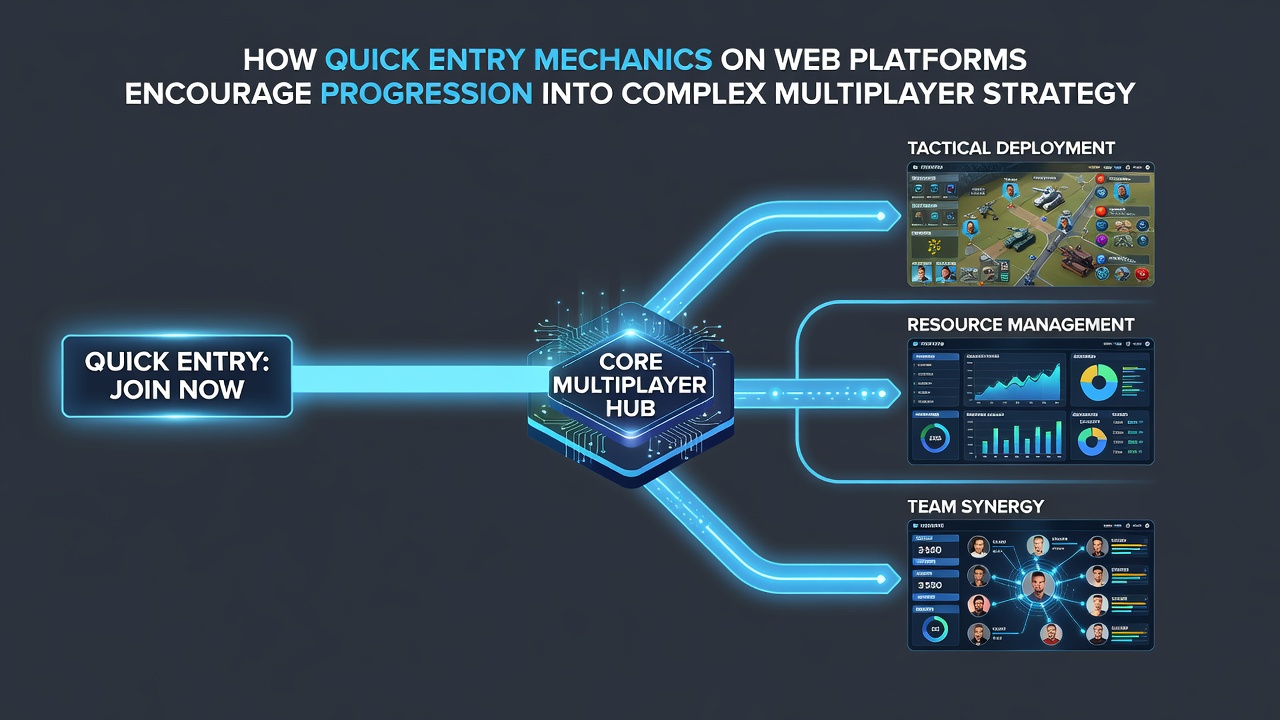
According to statistics released by the Entertainment Software Rating Board, browser strategy titles recorded a measurable uptick in cross-mode participation during the first half of 2026, and similar patterns appear in reports issued by the Pan European Game Information system, which document how progressive difficulty scaling keeps users moving from solo quick-play into group-based tactical environments without abrupt jumps in complexity.
Community Structures That Emerge
Once players advance, they encounter persistent worlds where daily quick tasks feed into weekly strategic events, creating feedback loops that reward consistent participation with access to higher-tier alliances, and observers tracking these networks find that guild formation accelerates when entry mechanics include shared event timers visible from the casual interface, thereby converting short visits into coordinated long-term campaigns.
Platform operators maintain these connections through API integrations that carry progress markers forward, so achievements earned in simple modes unlock strategic assets such as unit upgrades or map visibility, and this continuity ensures that the transition feels like a natural extension rather than a separate genre shift.
Conclusion
Web platforms continue to refine quick entry systems by monitoring retention metrics at each stage, and the resulting data shows consistent movement from brief interactions into sustained multiplayer strategy participation when onboarding remains frictionless and socially connected, thereby expanding network density while preserving accessibility for new arrivals.